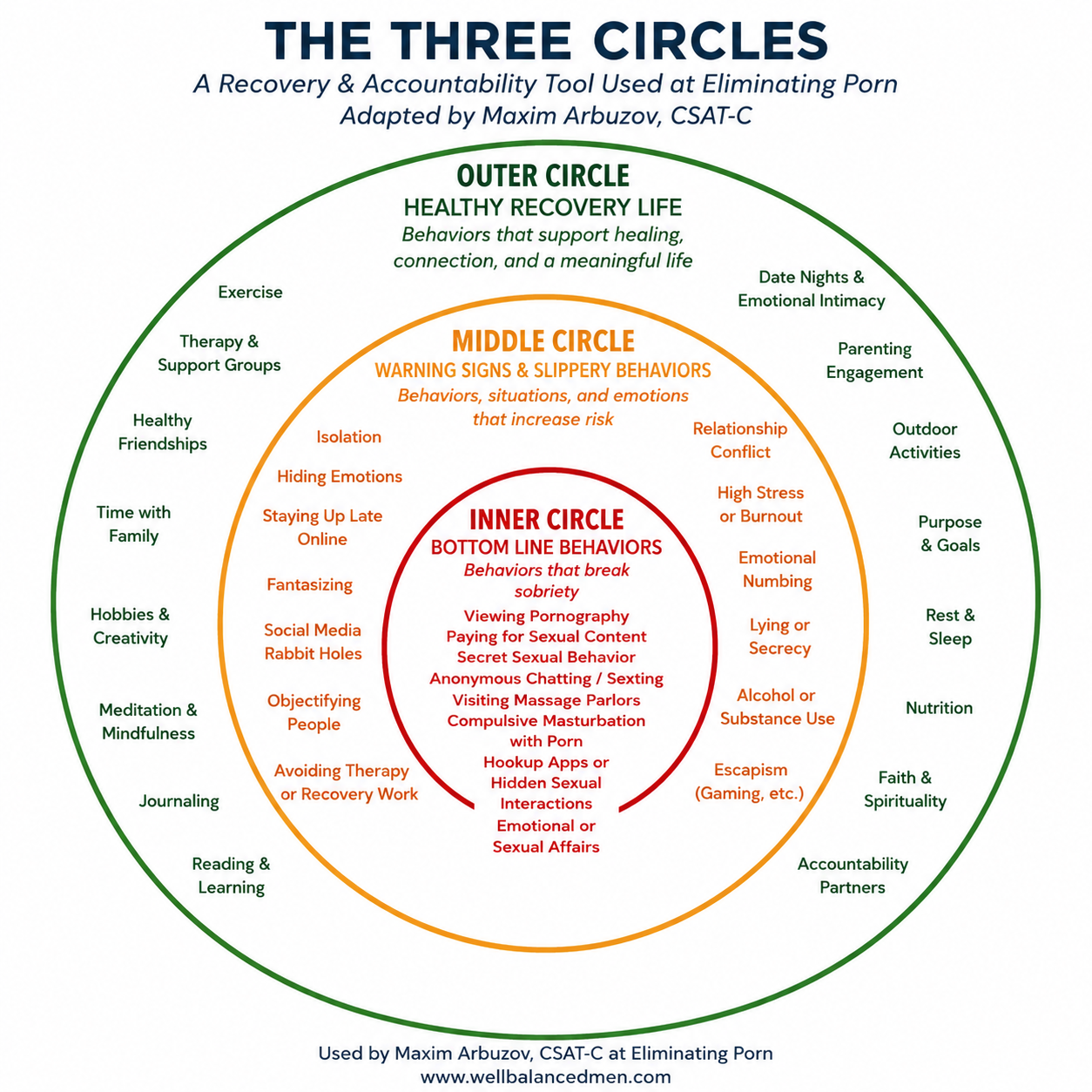
The Three Circles Exercise
Recovery is more than just “stopping a behavior” — it’s learning how to build a healthier life around your values. One of the tools Maxim Arbuzov, CSAT-C utilizes at Eliminating Porn is the Three Circles Exercise, a practical framework that helps men identify:
• Inner Circle → behaviors that break sobriety
• Middle Circle → triggers, warning signs, and boundary violations
• Outer Circle → healthy activities, self-care, connection, purpose, and meaningful living
The goal isn’t simply avoiding pornography or compulsive sexual behavior. The deeper goal is creating a life where connection, integrity, and emotional health become stronger than the urge to escape.
As Maxim Arbuzov explains through his work at Eliminating Porn, long-term recovery happens when men stop operating in survival mode and begin intentionally building structure, accountability, and fulfillment into everyday life. The Three Circles model helps transform recovery from “white-knuckling” into a sustainable lifestyle rooted in self-awareness and growth.
The Three Circles framework emphasizes that sobriety is not only about abstinence, but also about recognizing triggers and actively engaging in healthy, restorative behaviors that support emotional regulation and connection.
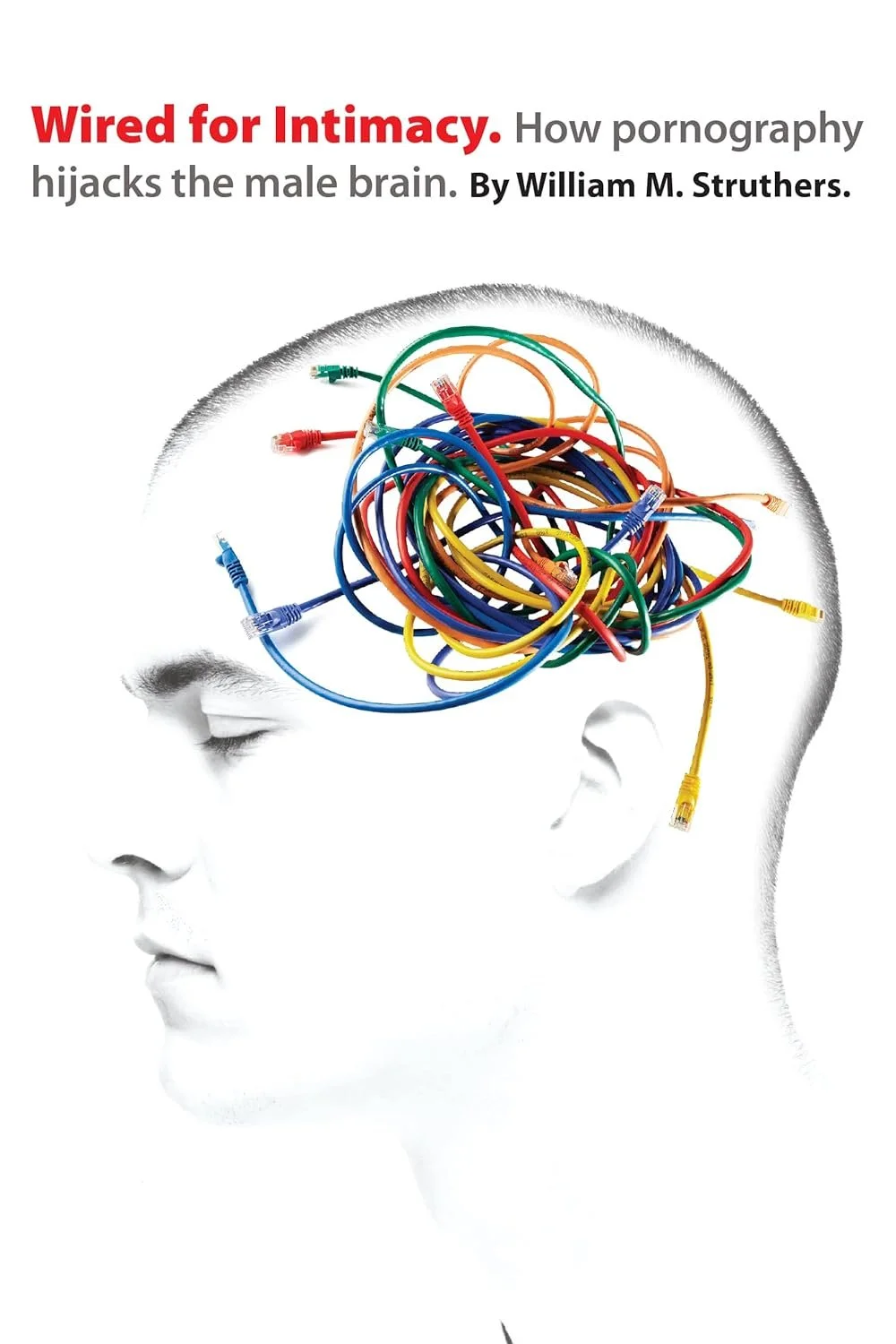
Wired for Intimacy: What Men Need to Understand About Pornography, the Brain, and Real Connection
Pornography has become deeply embedded in modern culture, shaping how many men view sexuality, relationships, intimacy, masculinity, and even personal identity. In Wired for Intimacy: How Pornography Hijacks the Male Brain, neuroscientist and researcher William M. Struthers explores how pornography impacts the male brain, emotional attachment systems, memory, and long-term relational health. Rather than approaching pornography struggles through shame alone, Struthers explains the neurological and psychological processes that make compulsive pornography use so difficult to overcome.
The book highlights how repeated pornography exposure can alter brain pathways related to reward, attachment, and arousal, often affecting emotional connection, intimacy, and relationship satisfaction. Struthers also discusses why approaches based solely on willpower, guilt, prayer, or accountability may not fully address the deeper neurological and emotional patterns involved. By understanding the science behind sexual conditioning and attachment, men can begin developing healthier coping strategies, stronger emotional awareness, and more meaningful relationships.
Wired for Intimacy offers an encouraging perspective for both single and married men seeking recovery, growth, and deeper connection. The book ultimately presents hope that healing, emotional intimacy, and healthier sexuality are possible through greater self-awareness, intentional change, and rebuilding authentic connection.

Your Brain on Porn: Internet Pornography and the Emerging Science of Addiction. by Gary Wilson
When Your Brain on Porn was first published the porn industry and its lobbyists reacted with outrage. How could a commodity so popular - and so profitable - be a problem? But evidence of porn's addictiveness has been accumulating ever since. In February 2022 the peer-reviewed journal Psychological Medicine published a large-scale, longitudinal study that confirmed what many users and former users of digital pornography had figured out for themselves: 'porn - a male-dominated industry that targets a male-dominated audience - is associated with the erosion of the quality of men's sex lives.'
In the same month the World Health Organizationissued a clarification to its diagnosis of Compulsive Sexual Behaviour Disorder. Contrary to the claims of a vocal group of sexologists, the WHO insisted that the disorder 'may be expressed in a variety of behaviours, including sexual behaviour with others, masturbation, use of pornography, cybersex (including internet sex), telephone sex, and other forms of repetitive sexual behaviour.' Compulsive porn use is now recognised as a pathology by the world's leading health experts, in the most widely used diagnostic manual on the planet.
This should not be surprising. As soon as high-speed internet became widely available a decade ago, growing numbers of people began to worry that their porn use was running out of control. Far from preparing them for fulfilling relationships, viewing an endless stream of porn videos led to unexpected adverse effects. Perhaps most surprisingly, for the first time in history erectile dysfunction was becoming a pervasive problem for young men. This led to one of the largest informal experiments in the history of science. Tens of thousands of people have tried abstaining from sexually stimulating material in a process they call 'rebooting'. Many of them reported startling changes, from improved concentration and elevated mood to a greater capacity for real-life intimacy.
The late Gary Wilson listened to the stories of those who have tried giving up internet porn and related them to an account of how the reward system of the brain interacts with its environment. A growing body of research is definitively confirming what these pioneers discovered for themselves - internet pornography can be seriously addictive and damaging. No doubt the porn lobby will continue to try to sow doubt and distraction. But the evidence of both formal science and lived experience is now overwhelming.
In Your Brain on Porn Gary Wilson draws on both first-person accounts and research findings. In a voice that is generous and humane, he offers advice for those who want to stop using internet pornography. The publication of Your Brain on Porn is a landmark in our attempts to understand, and remain balanced in, a world where addiction is big business.