The Three Circles Exercise
A Recovery & Accountability Tool Used at Eliminating Porn
Adapted and reworded by Maxim Arbuzov, CSAT-C for use with men working through pornography addiction, compulsive sexual behavior, intimacy issues, and recovery-focused therapy at Eliminating Porn.
The Three Circles Exercise is one of the most effective recovery tools for helping men define sobriety, recognize relapse warning signs, and build a meaningful life outside of addiction. At Eliminating Porn, Maxim Arbuzov, CSAT-C frequently uses this framework with clients to help create clarity, accountability, and sustainable recovery habits.
Unlike vague goals like “I’ll just stop,” the Three Circles model gives men a concrete roadmap:
What behaviors are completely off-limits
What behaviors increase risk
What healthy behaviors support recovery and intimacy
This exercise is commonly used in sexual addiction recovery and is especially valuable for men struggling with pornography use, compulsive sexual behavior, secrecy, emotional isolation, or relapse cycles.
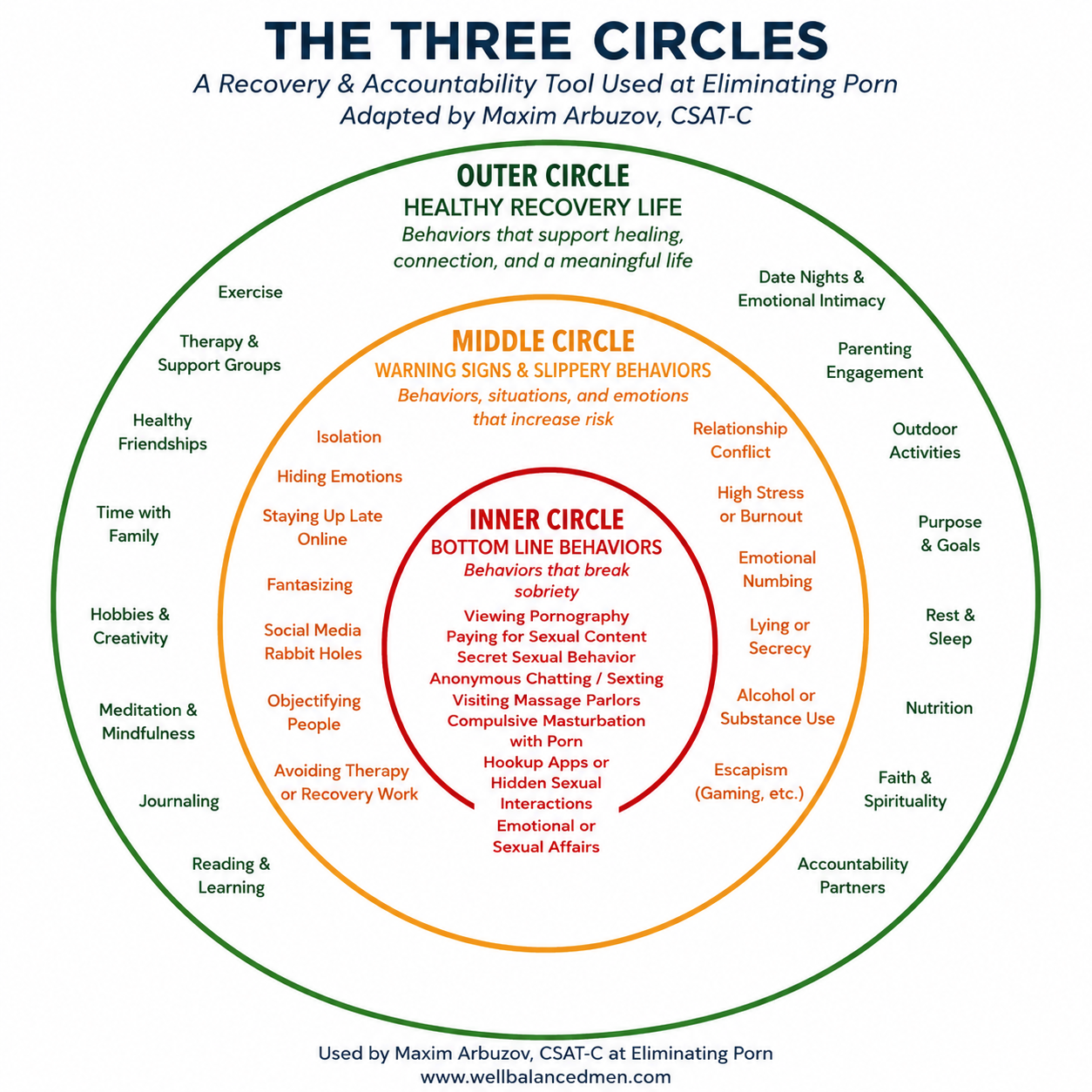
Understanding the Three Circles
INNER CIRCLE — “Bottom Line Behaviors”
Behaviors That Break Sobriety
The Inner Circle contains the specific actions that represent relapse or acting out behaviors. These are behaviors you are fully committed to abstaining from.
For many men in recovery at Eliminating Porn, these may include:
Viewing pornography
Paying for sexual content
Secret sexual behavior
Anonymous chatting or sexting
Visiting massage parlors
Compulsive masturbation connected to pornography
Hookup apps or hidden sexual interactions
Emotional or sexual affairs
The Inner Circle should focus on actions, not thoughts or temptations. Having urges, intrusive thoughts, or moments of struggle does not automatically mean relapse. Recovery is not perfection — it is honesty, awareness, and returning to your values.
As Maxim Arbuzov, CSAT-C explains in his work at Eliminating Porn, many men confuse shame with relapse. The goal is to build clarity instead of living in constant fear or self-condemnation.
MIDDLE CIRCLE — “Warning Signs & Slippery Behaviors”
Behaviors That Increase Risk
The Middle Circle includes behaviors, situations, and emotional states that increase the likelihood of moving toward relapse. These are your personal warning signs.
Examples include:
Isolating from others
Hiding emotions
Staying up late scrolling online
Fantasizing excessively
Social media rabbit holes
Objectifying people
Avoiding therapy or recovery work
Relationship conflict left unresolved
High stress or burnout
Emotional numbing
Lying or secrecy
Alcohol or substance misuse
Driving near acting-out locations
Excessive gaming or escapism
These behaviors are not necessarily relapse behaviors themselves, but they weaken emotional regulation and reduce accountability.
At Eliminating Porn, Maxim Arbuzov, CSAT-C helps men identify patterns that often happen before relapse, allowing them to intervene earlier rather than waiting until they are already in crisis.
OUTER CIRCLE — “Healthy Recovery Life”
Behaviors That Support Healing & Connection
The Outer Circle contains healthy activities that improve emotional regulation, reduce isolation, and help create a meaningful life outside addiction.
This is where true recovery grows.
Examples include:
Spending quality time with family
Exercise and movement
Therapy and support groups
Faith or spiritual practices
Healthy friendships
Creative hobbies
Outdoor activities
Meditation or mindfulness
Journaling
Reading and learning
Date nights and emotional intimacy
Parenting engagement
Building purpose and goals
Proper sleep and nutrition
Calling accountability partners
The Outer Circle is not just “staying busy.” It is about creating a life where compulsive behavior becomes less necessary because emotional needs are being met in healthier ways.
At Eliminating Porn, clients are encouraged to focus heavily on strengthening the Outer Circle because long-term recovery is not simply avoiding pornography — it is learning how to reconnect with yourself, others, and your values.
Reflection Questions
Inner Circle
What specific behaviors violate my sobriety?
What actions create shame, secrecy, or disconnection?
What am I no longer willing to justify?
Middle Circle
What emotions or situations usually happen before relapse?
What behaviors increase vulnerability?
Where do I tend to rationalize or minimize risk?
Outer Circle
What helps me feel connected and grounded?
What activities improve my mental health?
What kind of man, partner, or father do I want to become?
Important Reminder
The Three Circles are not meant to punish you. They are meant to create:
Awareness
Accountability
Emotional honesty
Recovery structure
Self-understanding
Recovery is not about becoming perfect. It is about becoming more honest, emotionally connected, and intentional with your life.
This adapted exercise is commonly used by Maxim Arbuzov, CSAT-C in his work with men navigating pornography addiction recovery, intimacy struggles, trauma, and compulsive sexual behavior through Eliminating Porn.
The 1. Sex Addicts Anonymous (SAA) fellowship is the original creator of the Three Circles recovery tool. It was later heavily popularized and expanded upon in clinical therapy by Dr. Patrick Carnes. It functions as a relapse prevention plan where behaviors are mapped out to define sobriety: [ 1, 2, 3]
